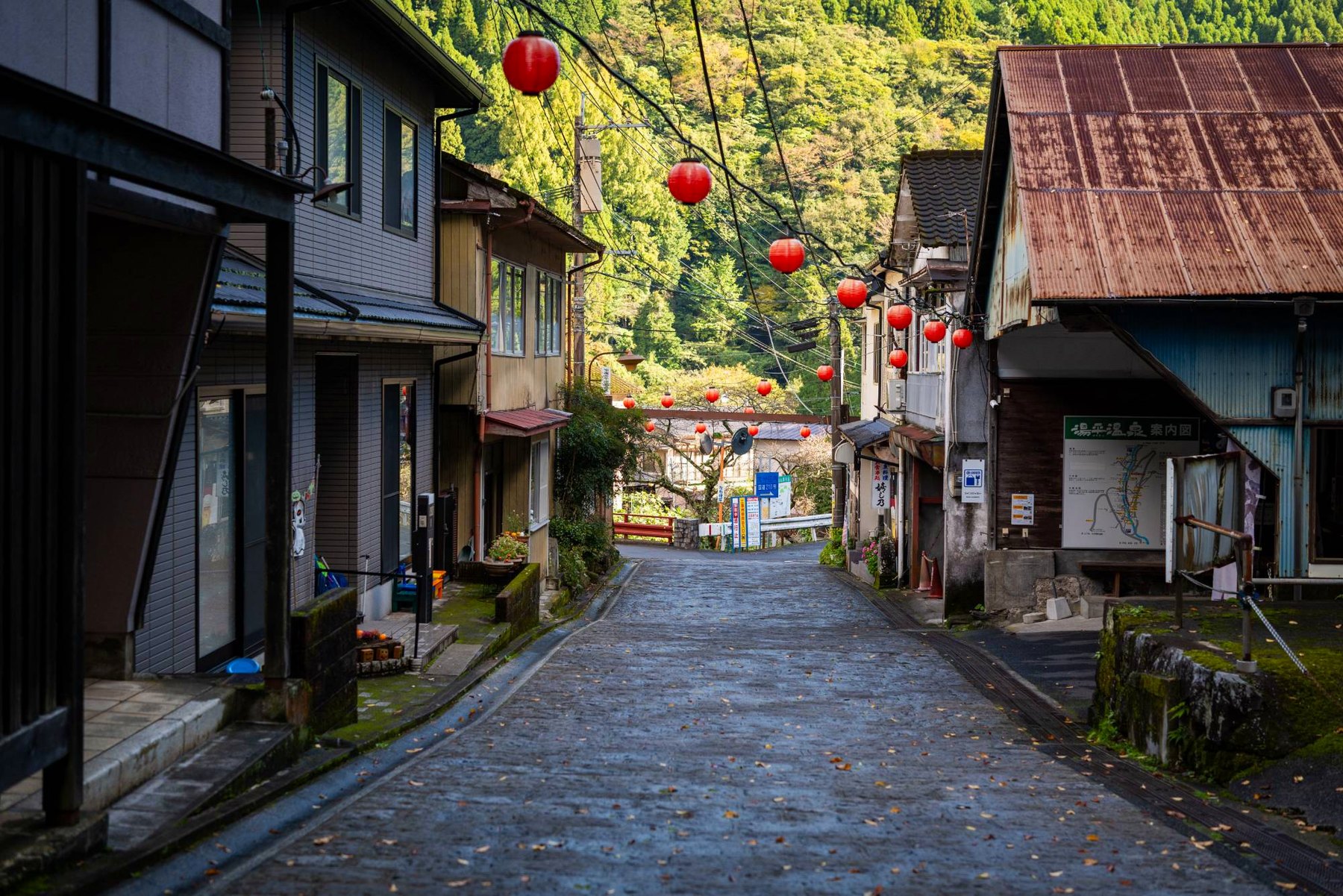
Stone paved streetsA slope veiled in steamWander downhill
Yunohira is said to have begun as a hot spring town during the Kamakura period.
A cobblestone slope runs along the Kagono River valley, with inns on either side.
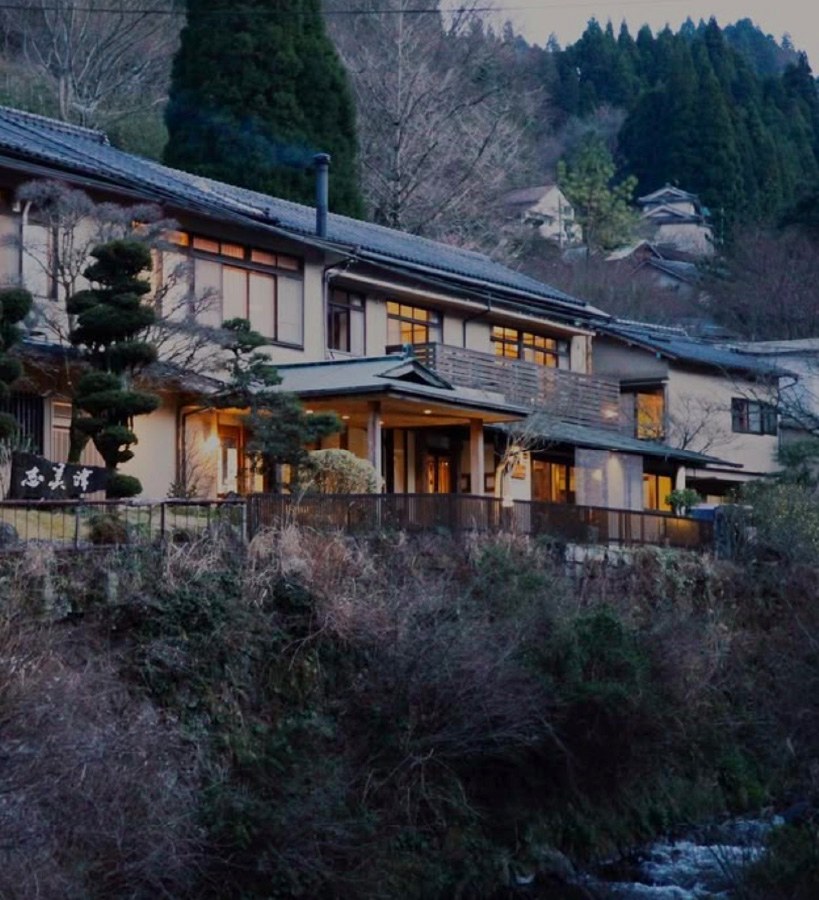
Ryokan Shimizu stands beside the river.
In this valley of healing waters,eight hundred years have passed.
In the Kamakura period,
hot springs were discovered in the valley.
Yunohira's hot springs are said to have been discovered during the Kamakura period. By the early Edo period, they were known for soothing stomach ailments. Samurai and wealthy travelers are also said to have visited the valley to take the waters.
Bathe, rest, then bathe again. Yunohira began as a town where people came to restore their health in the hot springs.
In the Kyoho era,
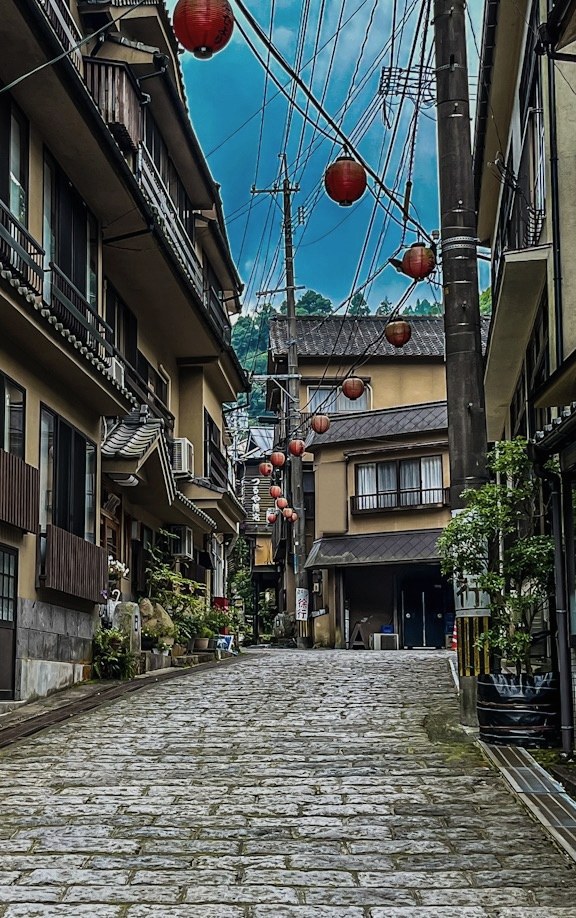
stones were laid along the slope.
During the Kyoho era (1716–1736), a mudslide struck the valley, followed by an epidemic. Tradition holds that Kudo Sansuke laid the cobblestones in hopes that people would recover.
With the cobblestones in place, the town took shape as a hot spring retreat. About 300 meters of the Edo-period slope remain beside the Kagono River today.
After the great Meiji fire,
a new inn in the Taisho era.
In April 1912, a great fire destroyed much of the inn district. The town was rebuilt and again welcomed visitors seeking the hot springs.
In 1926, Ryokan Shimizu opened beside the Kagono River.
Travelers in the Showa era
walked this slope.
In 1930, the traveling haiku poet Taneda Santoka stayed in Yunohira and left a verse. A monument to it stands near the foot of the slope.
In 1982, Yunohira was one of the settings for the film “Otoko wa Tsurai yo: Hana mo Arashi mo Torajiro.”
After the bath,walk the stone paved streets.
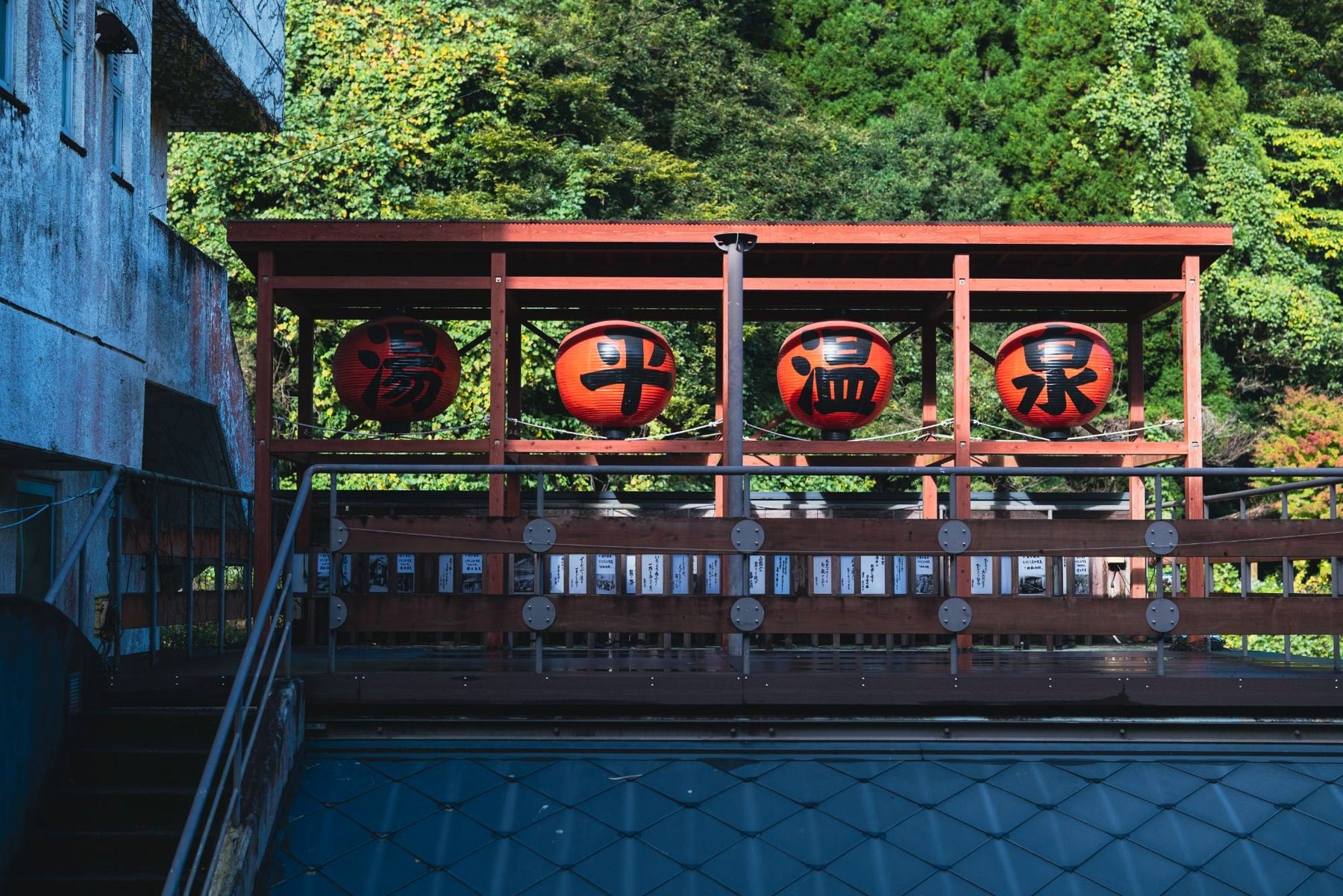
Cobblestone slope
The slope runs about 300 meters along the Kagono River. Its Edo-period cobblestones remain, and red lanterns glow beneath the eaves after dark.
Five public baths
- Kin no Yu
- Gin no Yu
- Naka no Yu
- Suna Yu
- Hashimoto Onsen
Traditional public baths are found throughout the hot spring town. Kin no Yu, said to be the oldest, also has a spring source from which visitors may drink.
ShigurekanSantoka Museum
A small museum partway up the slope, named for a verse by Santoka. A desk and brush invite visitors to write down a verse from their travels.
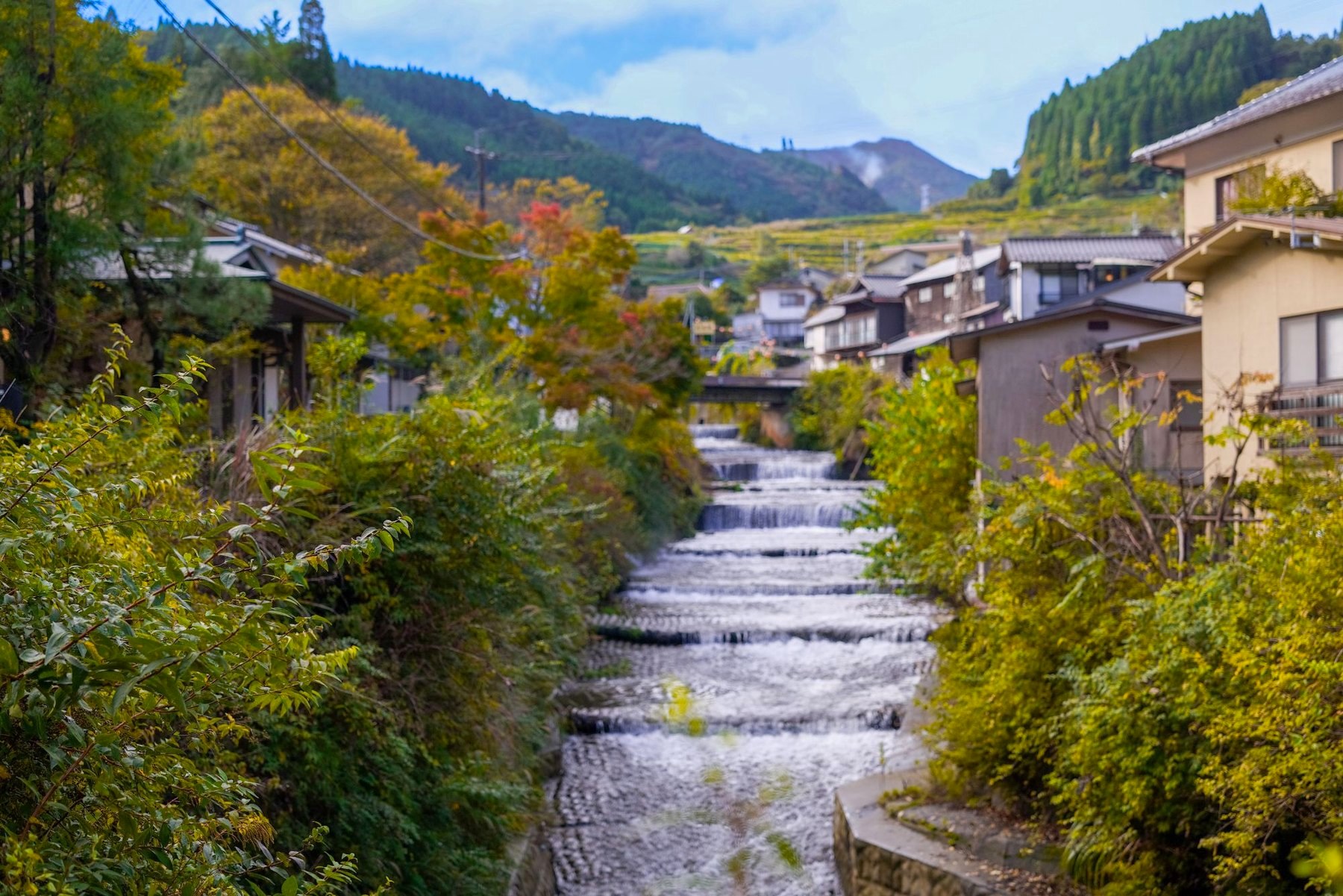
The river's currentsounds through the night.
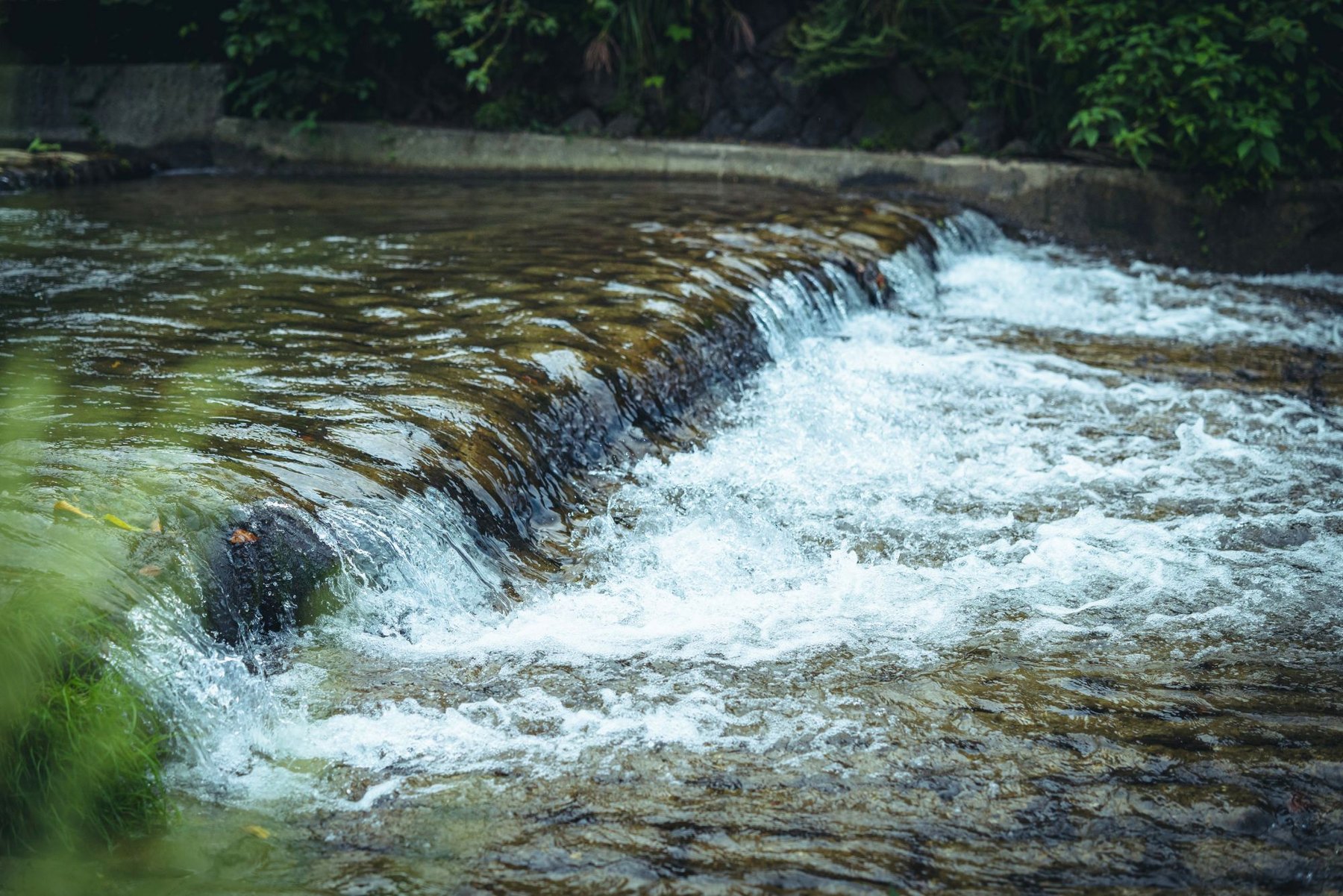
Kagono RiverThe Kagono River flows through the center of the hot spring town, tumbling over its stepped bed. Ryokan Shimizu faces the river; open a window and you can hear its current.
From Kikubata Park on the hill, you can look over the hot spring town. The Yunohira Onsen Festival takes place in May, and flowing somen noodles are served along the cobblestones in July.
At the station in the valley,we'll be there to meet you.
Arriving by train
| Nearest station | Yunohira Station on the JR Kyudai Main Line |
|---|---|
| From the station | About 10 minutes by car |
| Station transfer | Station pickup and drop-off require advance reservation. Trains run about once an hour. |
Arriving by car
| Nearest interchange | Oita Expressway Yufuin IC |
|---|---|
| From the interchange | About 11 km via National Route 210, about 20 to 25 minutes |
| In the hot spring town | There are many narrow roads, so please call us if you get lost. |
〒879-5112 263 Yunohira, Yufuin-cho, Yufu City, Oita PrefectureTEL 0977-86-2111Open map
Information
- Check-in
- 15:00〜18:00
- Check-out
- 10:00
- Telephone
- 0977-86-2111
 In a winter drizzle,human kindnessbrings tears to my eyes.Taneda Santoka · Yunohira, 1930